Chiba Hilton
The luxury hotel where Molly brings Case to meet Armitage and receive the offer that converts his private desperation into the novel’s central operation.
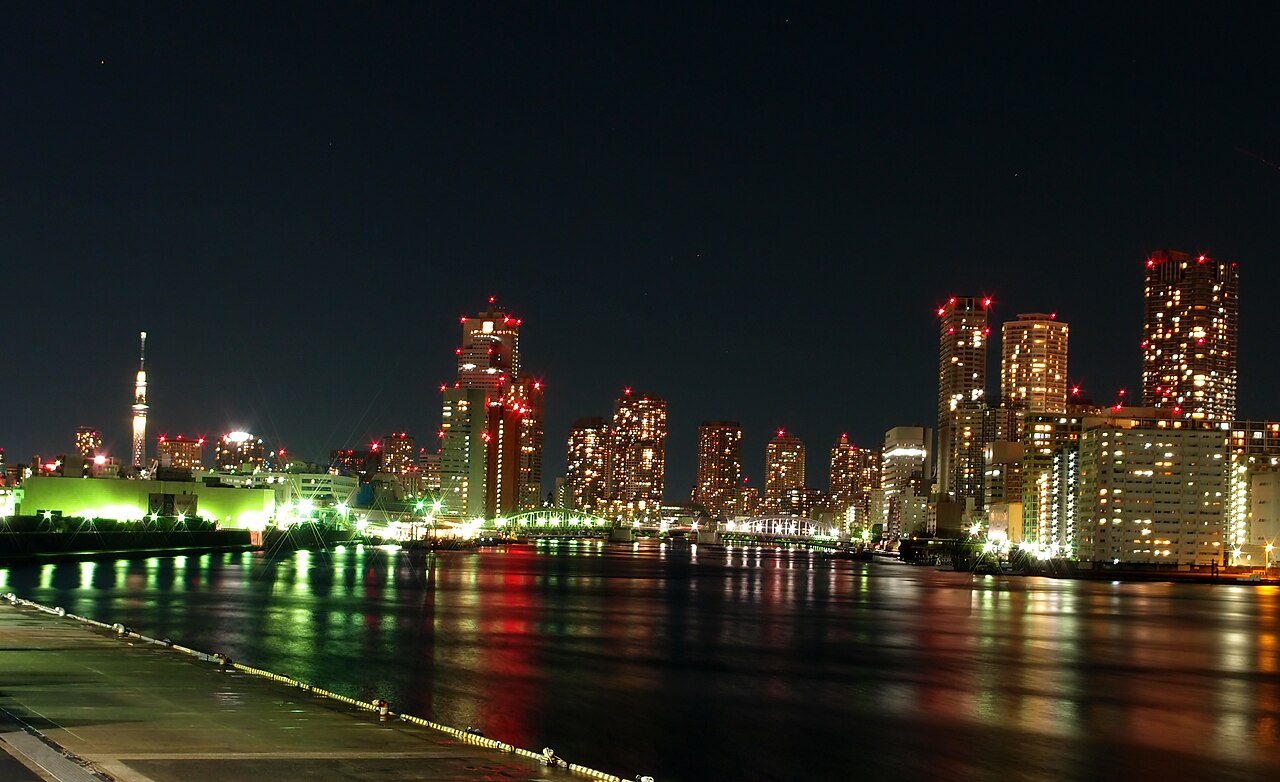

The Chiba Hilton is the setting of the Chapter 2 recruitment scene. Molly takes Case there immediately after confronting him inside his capsule at the Cheap Hotel. He comes to himself high above the city, with Armitage waiting to present a bargain: medical restoration of Case’s damaged nervous system in exchange for his work as a console cowboy. The hotel is therefore the first place where the resources behind Molly become visible, even though the real sponsor remains hidden.
A recurring cataloging mistake calls the meeting place Room 25. The novel instead locates it on the twenty-fifth floor. The room measures roughly ten by eight meters and constitutes one half of a suite, with a narrow balcony, sliding glass panels, a Braun coffee maker, imitation rice-paper surfaces, and a silk futon. Those details should be kept separate from any layout or furniture invented for the unfinished graphic adaptation.
“After a year of coffins, the room ... seemed enormous.”
The canonical room
The prose supplies a compact but usable inventory. Glass doors lead toward a narrow balcony, a low table holds a white coffee machine, and the room uses expensive materials that imitate a traditional Japanese interior. Case is given a bright mug while Molly sits on the futon and strips her flechette weapon. Armitage moves between the window and the room as he questions Case. No room number is stated, and the suite is not mapped beyond the occupied half.
That limit matters for visual references. The graphic novel and later concept art can help document adaptation history, but their camera angles, furnishings, clothing, and skyline are not evidence for the prose setting. A novel-canon illustration should begin with scale, balcony, table, coffee machine, futon, and the view toward the bay, while leaving unspecified walls and adjoining rooms deliberately uncertain.
Armitage’s recruitment scene
Armitage uses the room as a controlled interview chamber. He links modern cowboy software to the military intrusion programs developed for Screaming Fist, then claims his organization has built a detailed behavioral model of Case. Case initially rejects the pitch because he believes his neural damage is irreversible. The offer becomes credible only when Armitage demonstrates access to medical knowledge and money beyond anything Case found during two years in Chiba.
Molly’s role combines escort, witness, and physical enforcement. She makes clear that Case will hear Armitage out, but she also translates the employer’s promises into terms Case can evaluate. Case’s attempt to throw hot coffee at Armitage shows that the luxurious surroundings have not made him compliant. Armitage’s easy evasion, composure, and extensive file establish an imbalance of preparation before any contract is accepted.
Luxury against the Cheap Hotel
The Hilton appears enormous because the narration measures it through Case’s recent year of capsule living. His Cheap Hotel unit is a narrow rented shell used for sleep and storage, protected by obsolete access hardware that Molly can defeat. The Hilton offers unused space, a private balcony, branded appliances, and a view over the territory Case has been struggling to survive. The contrast is economic before it is decorative.
Armitage’s wealth also changes what can happen to Case’s body. Street income paid for inconclusive examinations; the new patron can commission an advanced repair, replace damaged organs, and impose biochemical controls. The suite frames that shift without making it benevolent. Comfort, surgery, surveillance, and coercion arrive as one package, demonstrating how luxury can function as an instrument of recruitment rather than a reward freely enjoyed.
An operational threshold
After accepting, Case leaves the room for treatment and begins testing the story he has been given. Julius Deane can identify only a protected arrangement between Armitage and the Yakuza, which confirms that the apparent hotel guest has unusually screened backing. Case later returns to settle debts with Armitage’s New Yen and waits for his repaired nerves to heal. The Hilton meeting thus reorganizes every Chiba relationship around a new source of capital.
As a location, the Chiba Hilton should not be expanded into a general article about all Hilton-branded sites in the novel. Istanbul has another Hilton, while Case later stays at the Intercontinental on Freeside and awakens at a Hyatt after the run. The Chiba property’s specific purpose is initiation: it places a dying street operator inside a room large enough to reveal that someone has already planned his exit.
Trace the signal
Source notes
Novel facts are checked against the text; interpretation and publication claims are separated by source type. Read the editorial standards.
- Primary textNeuromancer — William Gibson; Ace, 1984
Primary-text key used by the character and location dossiers. Chapter locators are preferred to edition-specific pagination.
- ScholarshipStudy guide to Neuromancer — Paul Brians, Washington State University ↗
Archived academic reading guide for allusions, vocabulary, and chapter-level orientation.
- ReferenceNeuromancer chapter index — OpenFiction ↗
A chapter-level orientation aid. Plot claims are checked against the novel.