Chiba City
The Japanese port city whose clinics, arcologies, and black markets form Case’s point of reentry into the plot.
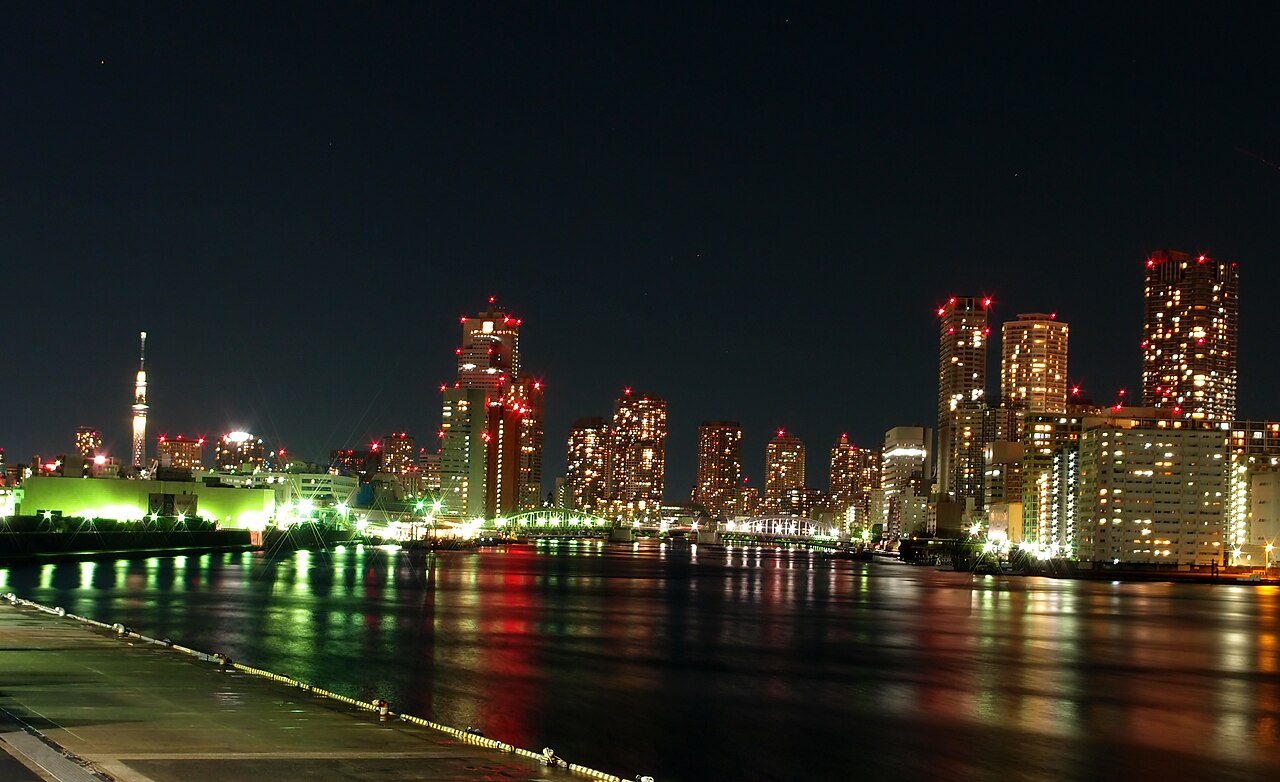

Chiba City is the opening location of Neuromancer and one of the world’s leading centers for experimental medicine, neural modification, and gray-market surgery. Case comes there hoping someone can reverse the damage that prevents him from entering cyberspace. Chiba’s reputation travels farther than its geography: Riviera’s implants, Molly’s alterations, Deane’s replacement therapies, and Case’s hoped-for cure all point back to its concentration of expertise. Yet the city never becomes a neutral laboratory. Brokers decide which clinic can be reached, criminal work pays for procedures, and patients may emerge with new dependencies or obligations.
The city is divided among corporate arcologies, port infrastructure, and the older border district called Night City. Its medical sophistication exists beside precarity and organized crime, making Chiba both a place of bodily possibility and a market where vulnerability is routinely monetized. The opening moves between urban scales with unusual precision, from the black water of the bay and corporate cubes to alleys, bars, capsule racks, and a fighting dome. These nested spaces explain how a global technical economy is actually inhabited. Case knows local routes intimately while remaining excluded from the corporate resources able to change his condition. That imbalance explains why a city famous for bodily repair initially leaves him damaged: expertise is abundant, but access is brokered through money and power.
“Night City was like a deranged experiment in social Darwinism.”
Port, arcologies, and borderland
Corporate factory domes and arcologies dominate the formal city, while the zone between them and the port has no stable official identity. That older fabric becomes Night City, an economy organized around sailors, technicians, clinics, bars, and illegal services.
Case’s repair also reveals the city’s international reach. Armitage’s money assembles specialists and procedures quickly, but the work remains situated in Chiba because its medical economy can supply expertise, discretion, and recovery drugs together. The city’s global reputation is therefore produced by a local concentration of labor. Calling the result underground medicine should not erase the trained people, equipment, and logistical coordination that make an illicit procedure reliable enough for a major operation.
Medical economy
Chiba’s clinics can alter nerves, senses, reflexes, organs, and appearances, but access depends on money and connections. Case’s failed search for a cure contrasts with the rapid, expensive repair Armitage can purchase once the cowboy becomes useful.
Chiba’s relation to the body is never only liberating. Molly has purchased capabilities that support independence, while Case’s new pancreas and neural repair arrive with employer-defined conditions. Linda and other street residents face risk without comparable access. Deane can renew organs over decades. Reading these cases together shows that the city does not dissolve biological limits uniformly; it prices different forms of continuation and distributes them according to power.
Role in the opening plot
Case’s final weeks in Chiba move among the Chatsubo, Ninsei, the Cheap Hotel, criminal contacts, and Sammi’s arena. Molly’s arrival and Armitage’s offer transform those local routes into the first stage of a planetary and orbital operation.
Atmosphere and significance
Pollution, dead daytime neon, multilingual commerce, and repurposed technology make the city feel layered rather than newly futuristic. Chiba establishes the novel’s central visual rule: advanced systems arrive unevenly and are immediately absorbed into ordinary appetite, labor, and decay.
Textual evidence and reading
The opening description places factory domes behind the port and identifies the older strip between them as an area without an official name. Night City is a practical label produced by use, with Ninsei as its active spine. Daylight scenes show shuttered bars, dead signs, and pollution; at night the same infrastructure becomes legible through crowds, neon, food, drugs, and rumor. That cycle is evidence that Chiba’s famous visual field is not continuous spectacle. It is a work schedule and market rhythm built over aging streets.
Case’s movement supplies another map. He travels from the Chatsubo through Ninsei and Baiitsu to the Cheap Hotel, seeks weapons and pharmaceuticals, visits Deane’s curated office, and follows Molly to Sammi’s. After Armitage intervenes, surgery and recovery take place through facilities Case could not access alone. The sequence supports a reading of Chiba as a city where bodies are editable but not equally owned. Technical abundance intensifies rather than abolishes class difference because the decisive resource is the ability to command specialists without becoming collateral for their fee.
Trace the signal
Source notes
Novel facts are checked against the text; interpretation and publication claims are separated by source type. Read the editorial standards.
- Primary textNeuromancer — William Gibson; Ace, 1984
Primary-text key used by the character and location dossiers. Chapter locators are preferred to edition-specific pagination.
- ScholarshipStudy guide to Neuromancer — Paul Brians, Washington State University ↗
Archived academic reading guide for allusions, vocabulary, and chapter-level orientation.
- ScholarshipCybernetic Deconstructions — Scholarly criticism via JSTOR ↗
Critical account of postmodernism and unstable boundaries among humans, machines, and representations.