Jarre de Thé
The mirrored Ninsei teashop where Case takes the night’s first stimulant and Linda warns him that Wage intends to have him killed.
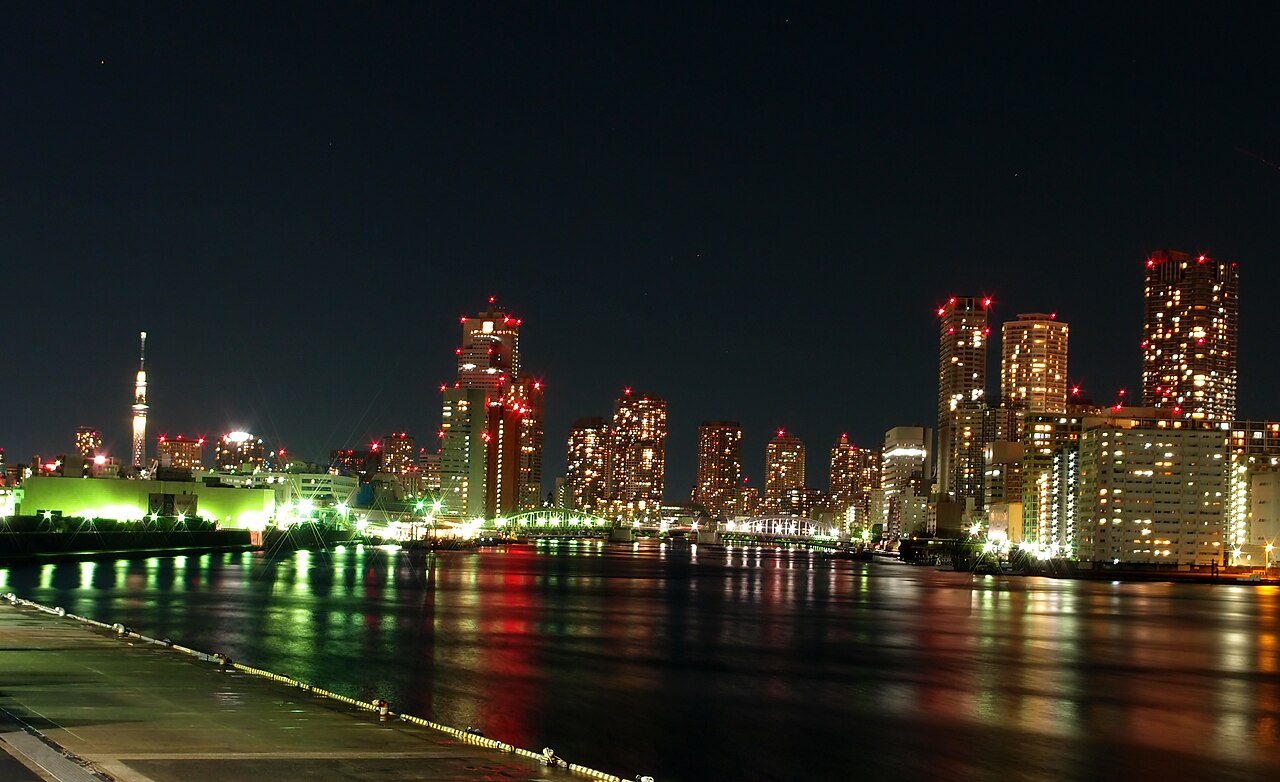

Jarre de Thé is a teashop on Ninsei, two blocks west of the Chatsubo. Early in Chapter 1, Case sits there with a double espresso and a potent pink stimulant purchased through Lonny Zone’s network. Linda Lee finds him at the table and reports that Wage wants him dead, setting Case’s fearful movement through Night City in motion.
The room is one of the opening chapter’s most precisely placed small interiors. Mirrors cover the walls, red neon frames the panels, and the décor mixes Japanese traditional references with aging Milanese plastics. That collage matters more than any generic cyberpunk redesign: the Jarre is worn, commercial, culturally hybrid, and already old-fashioned to its customers.
A fixed point on Ninsei
The two-block relation to the Chatsubo gives readers a rare explicit distance in Night City. Case can move between a familiar expatriate bar, the teashop, street vendors, the arcade, and his capsule lodging without those sites becoming one undifferentiated neon strip. The Jarre belongs to the same local economy but offers a more exposed, reflective setting for a private warning.
Because Ninsei is the district’s social spine, a short walk can carry Case across different kinds of surveillance. Mirrors multiply sightlines inside the shop, while the street outside contains strangers, workers, sailors, and the figure he believes is following him. Geography and paranoia develop together: each named stop gives him another chance to test an account that remains unverified.
Linda’s warning
Linda says that Wage plans to kill Case and describes danger close enough to demand immediate action. Case notices her illness and gives her a crumpled New Yen note despite his own debt. He accepts the warning because it matches his expectation that a delayed deal has violated Night City’s narrow commercial protocol.
The information is later complicated when Wage denies ordering a hit and Case discovers that Linda used the fear to locate his stored RAM. The Jarre scene should therefore be summarized as a warning, not as confirmation of Wage’s intent. It demonstrates how accurate knowledge, deception, need, and affection can occupy the same conversation without becoming easy to separate.
Stimulant and espresso
Case begins the night by combining a strong amphetamine-like drug with coffee. The action establishes his tolerance and accelerating self-destruction without pausing for a clinical explanation. It also makes the teashop a work station for street survival: he alters his state before evaluating threats, moving goods, or confronting anyone who might be watching.
Later, Armitage’s medical intervention prevents common stimulants from affecting him, so the Jarre retrospectively marks the body he is about to lose. His dependence is not erased by the new organs; only familiar routes to intoxication are blocked. The teashop’s ordinary service places that larger struggle inside a small repeated act of purchase and consumption.
Name and hybrid design
The French phrase means tea jar or tea pot. Readers have noted that Chatsubo also names a tea vessel in Japanese, creating a suggestive pairing of nearby establishments. The novel does not announce the parallel as a code, but it fits Night City’s mixture of imported languages and commercial identities. The French accent in the title should be preserved even when a search system offers an unaccented form.
The interior similarly resists a single national style. Traditional Japanese cues, European industrial design, mirrored panels, espresso, and red neon coexist because the district accumulates surfaces from different markets and decades. Calling the Jarre simply futuristic would miss the faded plastics and reused visual languages that make Gibson’s future feel already inhabited.
Not the Chat or the Namban
First-time readers often compress the Chapter 1 venues. The Chatsubo is Ratz’s bar and the novel’s opening room. Jarre de Thé is where Linda delivers her warning. The Namban is associated with Wage and becomes the place where Case later settles his debt. Keeping those functions separate produces a clearer route through the chapter’s deliberately rapid scene changes.
No later adaptation image should be used to fill gaps as novel fact. The prose gives enough for a restrained entry: location relative to the Chat, mirrored red-neon walls, mixed décor, the espresso and drug, Linda’s arrival, and the New Yen exchange. Its importance comes from how those few details concentrate Case’s bodily decline and unreliable relationships.
Trace the signal
Source notes
Novel facts are checked against the text; interpretation and publication claims are separated by source type. Read the editorial standards.
- Primary textNeuromancer — William Gibson; Ace, 1984
Primary-text key used by the character and location dossiers. Chapter locators are preferred to edition-specific pagination.
- ScholarshipStudy guide to Neuromancer — Paul Brians, Washington State University ↗
Archived academic reading guide for allusions, vocabulary, and chapter-level orientation.
- CommunityReader discussions of Neuromancer — Reddit communities ↗
Used only to document recurring reader questions and interpretations, not factual canon.