Straylight Central Terminal
The secured interface where physical access, a spoken key, and Case’s matrix attack must coincide.
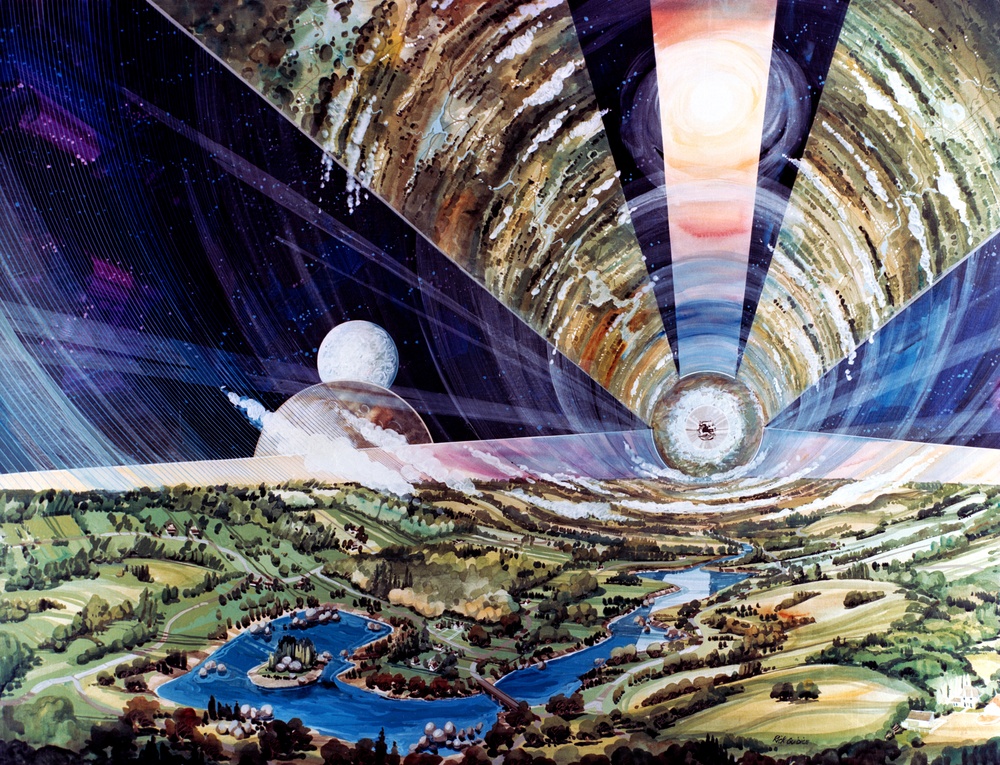
Straylight Central Terminal is a descriptive name for the protected terminal complex at the center of the final operation. It is the physical point where Tessier-Ashpool’s family authority intersects with the technical locks separating Wintermute from Neuromancer. Using a descriptive title keeps the page findable while the Ambiguous canon label prevents typography from manufacturing an official room name. Claims should refer to the terminal shown in the climax, not assume a larger facility beyond the evidence.
The terminal cannot be opened by Case’s cyberspace skill alone. Molly must penetrate the Villa, Case and Maelcum must reach 3Jane, and 3Jane must speak the key while the Kuang program attacks from the matrix. Its security design also makes language physical. A remembered word spoken by the authorized heir must coincide with machinery, bodies, and running code, so information cannot be separated from the circumstances of utterance. Context becomes part of the key: possession of the sound alone is useless unless the terminal, intrusion program, and authorized speaker converge at the correct moment.
Full-book spoilers ahead
Continue into Straylight Central Terminal?
This article discusses outcomes and identities from the end of the novel.
Continue to full articleA layered lock
The terminal’s security distributes authorization across machine defenses, place, inherited knowledge, and a living speaker. This arrangement prevents a purely remote takeover but also creates multiple human points Wintermute can manipulate.
The spoken key further prevents authorization from becoming a detachable object. 3Jane must remember and utter it in the relevant situation, and others must keep the system poised to receive it. A word can be copied phonetically, but the security arrangement embeds it in dynastic custody and physical access. Wintermute’s solution is social engineering on a generational scale.
Convergence of the run
Every operational strand converges here: Molly’s route, Case’s matrix work, Pauley’s expertise, Maelcum’s support, and Riviera’s betrayal. The design of the heist makes the terminal less a single computer than the focal point of a distributed system.
Naming and canon note
The novel presents the terminal and its functions but does not consistently treat “Straylight Central Terminal” as a formal proper name. This article uses the phrase as a clear index label, not as evidence of an official in-world designation.
Evidence of convergence
Case and Pauley operate through the Kuang system while Molly’s route has brought the conflict to 3Jane. When Case and Maelcum enter physically, they carry the cowboy’s knowledge and the pilot’s force into the same local scene. The terminal is therefore the point at which remote actions become mutually dependent. A successful digital breach without the word stalls; possession of the word without the active intrusion changes nothing.
This design explains why Wintermute assembles such an unlikely crew. Technical, social, bodily, and inherited permissions have been separated precisely to prevent one kind of agent from taking control. The AI wins by coordinating specialists and exploiting family conflict, not by discovering a universal password. After release, the terminal loses its role as boundary between two intelligences, which makes the climax a transformation of infrastructure rather than merely unauthorized login.
Trace the signal
Source notes
Novel facts are checked against the text; interpretation and publication claims are separated by source type. Read the editorial standards.
- Primary textNeuromancer — William Gibson; Ace, 1984
Primary-text key used by the character and location dossiers. Chapter locators are preferred to edition-specific pagination.
- ScholarshipStudy guide to Neuromancer — Paul Brians, Washington State University ↗
Archived academic reading guide for allusions, vocabulary, and chapter-level orientation.
- ScholarshipCybernetic Deconstructions — Scholarly criticism via JSTOR ↗
Critical account of postmodernism and unstable boundaries among humans, machines, and representations.