Le Restaurant Vingtième Siècle
Freeside’s intimate floating restaurant, where Riviera turns an elite dinner into the performance that secures his route toward Lady 3Jane.
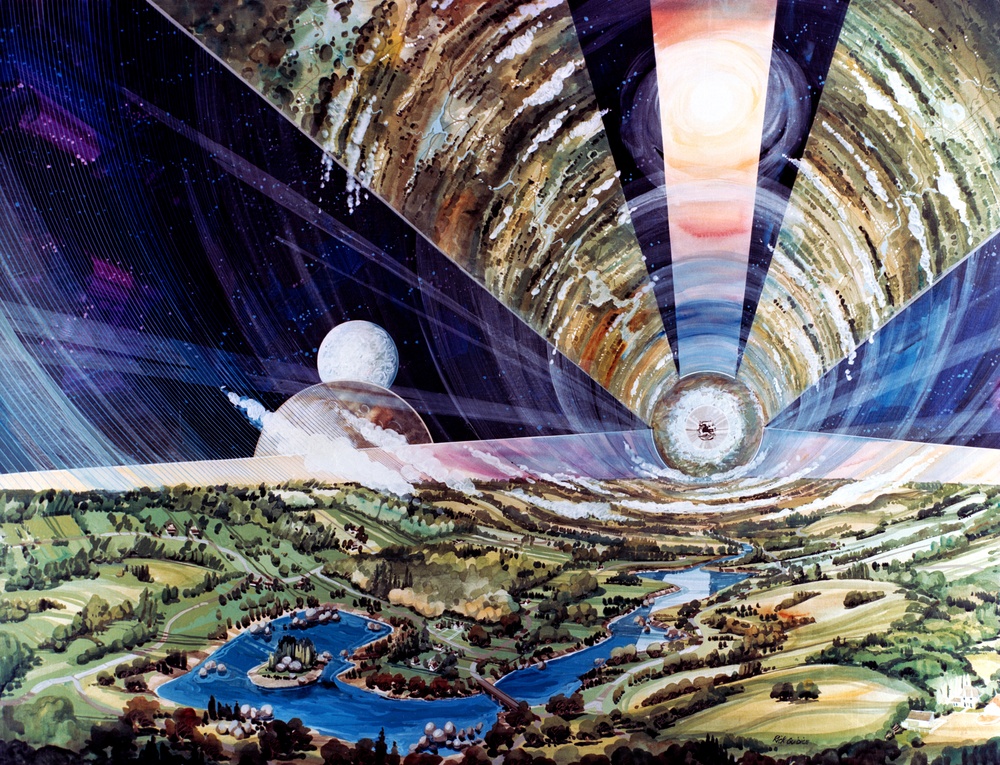
Le Restaurant Vingtième Siècle is the small, extremely expensive floating restaurant where Armitage takes Case and Molly to watch Peter Riviera perform. It sits on a lake near the Intercontinental and holds only a limited number of tables. The venue’s French name means Twentieth Century, making the reader’s present into a period label inside Freeside’s curated leisure economy.
The restaurant is often confused with Rue Jules Verne, the avenue named in the chapter title. They are not the same place: the Rue is a major street, while Vingtième Siècle is a particular dining venue reached within the resort district. Its plot importance lies less in cuisine than in audience selection. Riviera needs a prestigious stage where Lady 3Jane can encounter him as desirable entertainment rather than as an intruder approaching Straylight.
Full-book spoilers ahead
Continue into Le Restaurant Vingtième Siècle?
This article discusses outcomes and identities from the end of the novel.
Continue to full articleName and location
The French name situates the restaurant within Freeside’s international branding. A twentieth-century reference is antique from the characters’ perspective, much as a contemporary themed venue might evoke an earlier era without reconstructing it accurately. The novel does not provide a complete décor plan, so claims that the room imitates a specific decade should be marked as interpretation rather than physical fact.
The name also resembles that of a historical Belgian newspaper associated with the early publication of Tintin, but the novel never explains the choice. That connection is useful as a naming note, not proof of authorial intent. More securely, the restaurant belongs to a cluster of lakes, hotels, bars, and artificial landscapes that sell terrestrial nostalgia inside an orbital machine.
Dinner before the cabaret
Case arrives in poor condition after taking betaphenethylamine obtained through Cath and Bruce. His hands shake, his food goes largely uneaten, and he struggles to remain present while Armitage maintains a formally dressed, managerial appearance. Molly’s attention to the cost of the meal, including meat raised from an actual animal rather than produced in a vat, makes the restaurant’s expense materially legible.
The table does not create intimacy among the crew. Armitage withholds explanation, Case conceals his drug use, and Molly watches Riviera with professional suspicion. Fine service therefore intensifies rather than relieves the group’s fragmentation. The team occupies one table, but each participant is already following a different understanding of what the evening is meant to accomplish.
Riviera’s performance
Riviera presents a holographic cabaret centered on an assembled image of a woman modeled on Molly. The performance combines erotic display, bodily construction, and staged violence, exploiting details of Molly’s implants and history to make the spectacle personally invasive. Case becomes physically ill and leaves before it ends; the audience’s approval shows how readily elite novelty can absorb another person’s humiliation.
The scene demonstrates why Riviera was recruited. His projections are not merely disguises used during theft. He can create an event memorable enough to reorganize social attention, and he understands how to make danger appear exclusive and aesthetic. The restaurant supplies lighting, expectation, and a paying audience that authorize his images as art, at least for the duration of the show.
A social breach of Straylight
Lady 3Jane watches from a position Case notices only briefly. Riviera’s dedication and performance interest her, leading to his invitation into Villa Straylight. That outcome is the physical-access component Wintermute cannot obtain through Case’s matrix skill. The smallest restaurant in the resort becomes a breach point because an owner voluntarily admits the performer after seeing him in a socially credible setting.
Molly leaves after the show to prepare for the run and later explains why Riviera’s imagery struck a buried part of her experience. This makes the night both operational success and personal violation. A clear page should preserve both scales: Vingtième Siècle advances the heist by attracting 3Jane, while the same calculated spectacle deepens Molly’s resolve to kill Riviera.
Canon boundaries
The venue should not inherit visual details from fan art, the graphic novel, games, or screen concepts unless they are labeled by adaptation. The prose supports a lake, a floating restaurant, a very small and costly dining room, roughly a dozen tables, candlelit performance conditions, and proximity to the Intercontinental. It does not provide a full exterior silhouette or mechanical explanation for how the restaurant floats.
Separating the venue from Rue Jules Verne also prevents a common route error. Case moves through the avenue and resort district, stays at the Intercontinental, and attends this restaurant as distinct nodes. Their proximity matters, but collapsing them removes the social layering by which a public street leads to an exclusive room and then, through Riviera, toward the private Villa.
Trace the signal
Source notes
Novel facts are checked against the text; interpretation and publication claims are separated by source type. Read the editorial standards.
- Primary textNeuromancer — William Gibson; Ace, 1984
Primary-text key used by the character and location dossiers. Chapter locators are preferred to edition-specific pagination.
- ScholarshipStudy guide to Neuromancer — Paul Brians, Washington State University ↗
Archived academic reading guide for allusions, vocabulary, and chapter-level orientation.
- ReferenceNeuromancer by William Gibson — EBSCO Research Starters ↗
Structured overview of the novel's plot, characters, locations, and reception.